
Parking & Elevator
Moving Guide.
How to prepare for truck access, loading areas, elevator reservations, stairs, long carries and building requirements before your Bay Area move.
The move starts
before the front door.
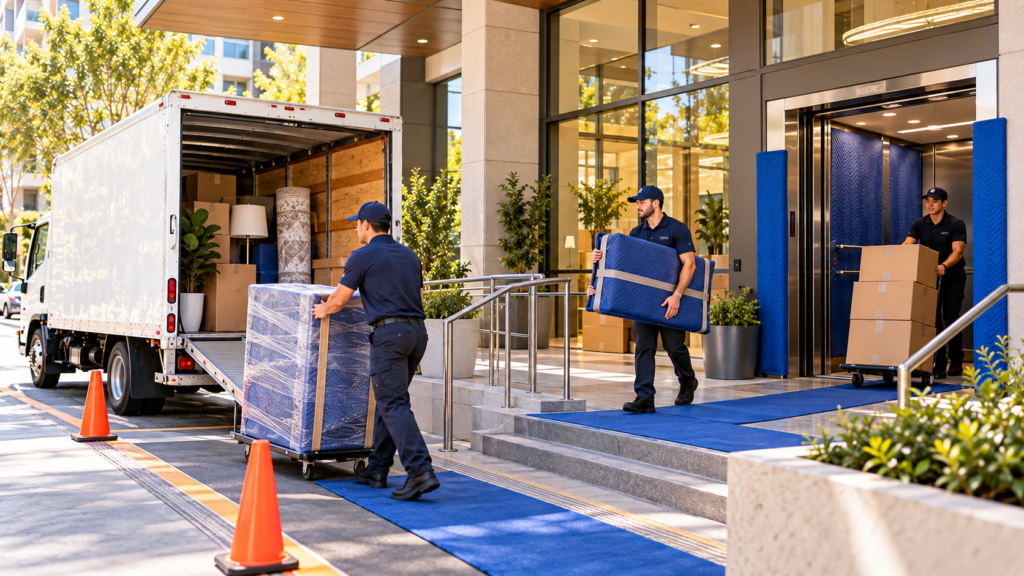
One of the easiest moving details to underestimate is access. A truck parked close to an entrance creates a very different move from a truck that must be positioned farther away. The same applies to an available service elevator versus multiple flights of stairs.
In dense parts of the Bay Area, these details can be particularly important. Checking them early gives the moving team better information for planning the crew, timing and equipment.
Where can the
truck go?
Start by looking at the actual loading path at both your origin and destination. The goal is not simply to find parking — it is to understand how furniture and boxes will travel between the property and the moving truck.
Check these details at both addresses:
- Is there a private driveway or designated loading area?
- Can a moving truck reasonably approach the building entrance?
- Are there posted street restrictions, time limits or loading rules?
- Does the building control access to its loading dock?
- Is there a gate, garage-height limitation or restricted entrance?
- Will there be a significant walk between the truck and the unit?
Parking and street rules vary by location and can change. Confirm current requirements with the relevant property manager or local authority rather than assuming a space will be available.
Reserve the
right time.
Many apartment, condominium and commercial buildings have specific procedures for moves. Some require a service elevator reservation, limit moving activity to certain hours, or require advance notice.
Once an elevator time is confirmed, share the reservation window with your mover. A restricted time window can affect how the day should be scheduled.
Count more than
bedrooms.
The size of the home is only one part of the moving plan. Stairs and carrying distance can change how furniture is moved through the property and how long loading or unloading may take.
Know the Route
Tell your mover approximately how many flights are involved and whether stairs are inside the unit, outside the building, or both.
Check the Distance
If the truck cannot park near the entrance, mention the approximate walking distance and any gates, ramps or obstacles along the route.
Also mention unusual items
Large furniture, safes, oversized pieces, delicate items and anything that may be difficult to maneuver through stairs or narrow spaces should be discussed before moving day.
Ask management
before moving day.
Building policies differ, so the property manager or management office is usually the best source for the building's current requirements.
Questions for building management
- Are moves limited to specific days or hours?
- Is an elevator reservation required?
- Is there a designated loading entrance or dock?
- Are there protective requirements for elevators, hallways or floors?
- Does the building require documentation from the moving company?
- Is there a move-in or move-out fee or deposit?
- Who provides access to restricted areas on moving day?
If the building requests documentation from the moving company, send the exact requirements to the mover early enough for them to review the request.
Recheck access
before the move.
Even if access was arranged weeks earlier, confirm the important details again shortly before moving day. Building schedules, contacts or instructions can change.
Less surprise.
Better planning.
The moving company does not need every tiny detail, but the information that changes access, timing or handling should be shared as early as possible.
Can the truck get close?
Know the likely loading position and any meaningful restrictions.
Is access reserved?
Confirm elevators, moving windows and management requirements.
What is the carry path?
Share stairs, distance, gates and difficult access with your mover.
Tell us about
your move.
Share your origin, destination, date and move size. Include stairs, elevator reservations, parking restrictions or long carries you already know about.